
Ray Bradbury Predicts The Future
…and in this case he did so not in a sci-fi tale but two general fiction stories in the 1950s, "In A Season Of Calm Weather" and “Sun And Shadow.”
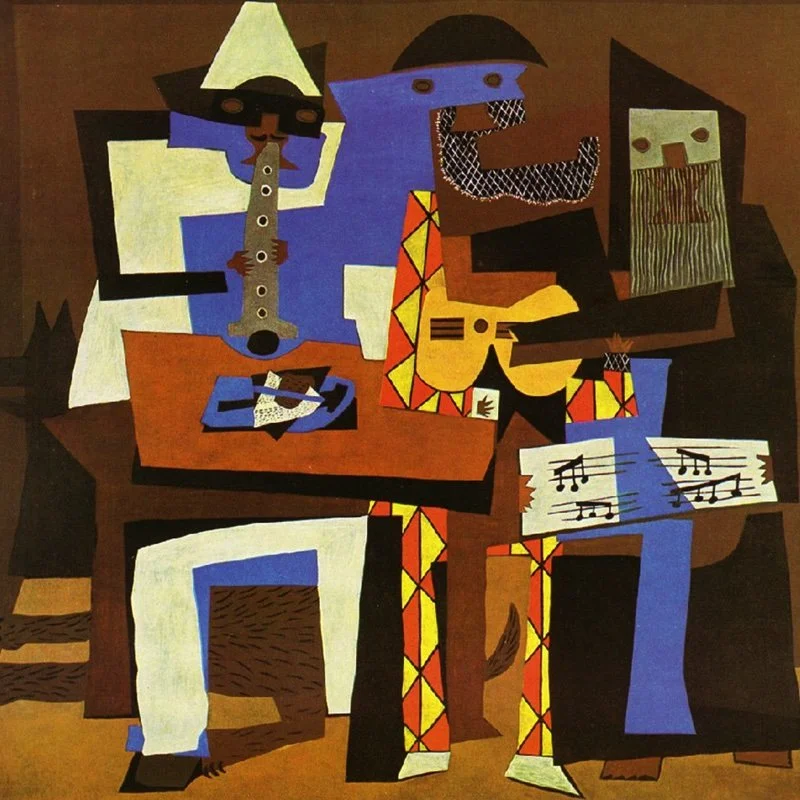
My head canon consistently recalls "In A Season Of Calm Weather" as “Picasso Summer,” a far more apt and focused title derived from the movie based on the original short story, The Picasso Summer.
As much as I love Ray’s work, The Picasso Summer is a disappointing misfire, taken away from its original director and re-cut / re-shot by the studio. Ray wrote the screenplay based on his short story but after he saw what the studio did to it, he used his Douglas Spaulding pseudonym instead.
"In A Season Of Calm Weather" is a beautiful meditation on art. A man takes his wife on vacation in Spain in hopes of meeting his artistic idol, Pablo Picasso. Frustrated in his attempts to meet Picasso, on the last night of their trip the man takes a solitary walk along the beach only to find an old man drawing pictures in the sand with a stick, the waves washing each away so he can draw a new one.
It’s Picasso. (And don’t come at me saying Picasso was a monster, I know that but can also acknowledge he created brilliant art; STFD & STFU, I’m making a point here.)
In the story, the man is tempted to run back to his hotel to grab his camera and record the images Picasso draws yet he knows if he does Picasso will leave before he gets back.
So he stands there and watches as Picasso creates art for the sheer exuberance of creating art, not caring if it’s washed away, allowing the man to witness his creations without trying to take possession.
It’s a blessedly beautiful story, one that’s always dwelt in my heart.
The second story, “Sun And Shadow,” shows Ray’s sly, cheeky humor -- quite literally. When a photographer and his models arrive in a run-down Mexican village to do a high fashion shoot against a backdrop of dirt streets and crumbling buildings, an old villager responds by repeatedly dropping his trousers and photo-bombing the models. In the end, the frustrated fashion crew leaves the village alone.
Ray wrote that as a comment on colonialism (this a good decade before discussions of colonialism even began breaking in the public consciousness) but there’s on scene in the story that indirectly ties in with "In A Season Of Calm Weather.”
A dog relieves itself on an adobe wall and the elderly villager calls this to the photographer’s attention, saying look, isn’t this artistic?
And this morning =bang!= the two stories linked up in my head and provided a perfect comparison between genuine human creativity and AI slop.
We create not for others but for ourselves. David Gerrold says he writes for himself, he allows others to pay for the privilege of reading over his shoulder. Stephen King once said if you write for fame or fortune, you’re a monkey; you should only write because not writing is death.
Picasso creates on the beach knowing full well the waves will wash his art away; nonetheless, he creates.
He becomes aware of the young man, but as long as the young man simply observes respectfully and doesn’t interfere or attempt to capitalize on his art, Picasso is willing to let him share the moment and the joy.
That is what human creativity is all about, folks.
Add the real life Picasso’s art so awed and inspired Ray Bradbury that he incorporated the artist into a fictional meditation on the purpose and meaning of art, then add to that Ray’s stories triggering an insight in me that leads to this post, and you begin to grasp why creativity is so important even if it can’t -- or perhaps especially if it shouldn’t -- be commodified.
Picasso first and then Ray created works of art, the studio created a mess with their movie.
And the dog peeing on the wall?
AI slop.
There are countless examples of natural objects and events providing a never-ending source of amazement and beauty to human beings, and quite often that amazement and beauty becomes manifest in the work of human creators.
But it’s not created by humans for artistic purposes, it’s random natural occurrences that humans interpret and then re-interpret artistically.
The dog peeing on a wall is just an AI generating a random collection of pixels into something humans may be able to interpret as a coherent image / sound / text. It possesses no inherent meaning or purpose, it is simply the machine grinding something up.
And, yeah, I tolerate and accept AI in certain minor usage: Supplying story prompts a human will build off of, rendering a sketch in a couple of different styles to see which works best before doing the final work personally, running a recent composition though different instrumental arrangements to hear what sounds right, satire or parody clearly labeled as AI, etc.
What I don’t tolerate or accept are the people who tell AI to piss on a wall then attempt to force us to buy it by crowding out all other forms of expression.
© Buzz Dixon
![When The Opportunity Presents Itself [FICTOID]](https://images.squarespace-cdn.com/content/v1/590697e7d1758ec4d7669624/1758351476776-PNGLLSOXE6EIGKR7G1EY/FT+339+When+The+Opportunity+Presents+Itself+SQR.jpg)
![FNA [FICTOID]](https://images.squarespace-cdn.com/content/v1/590697e7d1758ec4d7669624/1758351297419-2XDVTDKEZYYZZQ7UKU1H/FT+338+FNA+SQR+.jpg)