
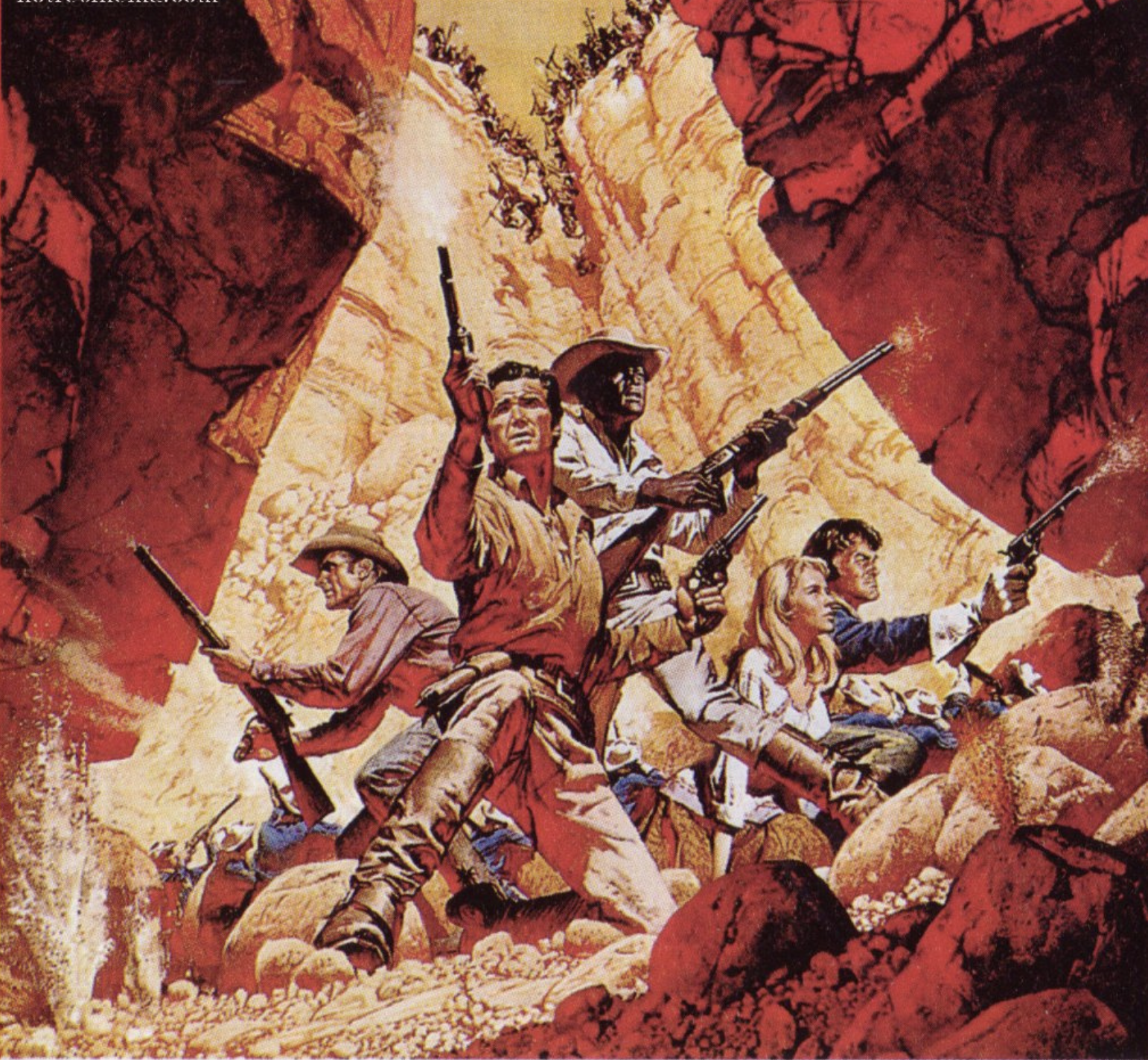
DUEL AT DIABLO (1966)
A short while ago Adam-Troy Castro posted a piece on the 1966 Ralph Nelson Western, Duel At Diablo.
Adam-Troy’s take? It’s an okay Western, nothing special.
I disagree.
Duel At Diablo is one of my favorite Westerns. While I wouldn’t put it in the top ten, it’s a film I’ve watched several times and would be more than willing to watch again should the chance present itself.
I find Duel At Diablo quite compelling even though it’s essentially a program Western. It called on audiences to examine their own thoughts regarding race and sex. Remember SCOTUS did not declare miscegenation laws unconstitutional until the year after Duel At Diablo was released.
Casting an actor with Native American ancestry (James Garner) and another who was African American (Sidney Poitier) in starring roles in a major motion picture was a very gutsy move at the time. Almost half the people who populated the West in the 2nd half of the 19th century were black, Hispanic, Native American, or of mixed ancestry but the popular narratives about the West -- from dime novels to B-Westerns -- relentlessly whitewashed that history. From that perspective Duel At Diablo is historically more accurate than almost all Westerns preceding it.
But Garner and Poiter’s casting is just the beginning. Garner is a widower whose wife was Native American; he carries her scalp with him and early on there’s a scene where a lout offers to buy it from him, thinking it just a souvenir trophy. Bibi Anderson is a white woman forever tainted in the eyes of white society by being captured / raped / impregnated by a Native American. That she wants her child back is a further disgrace in white society’s eyes. The recovery of her child and the subsequent battle with Apache warriors led by the child’s grandfather who doesn’t want to lose an infant he loves elevates the Native Americans from their typical faceless antagonist standing to a far more humanized role.
One thing that caught audiences by surprise at the time was the upending of the “Sacrificial Negro” trope.
We’ve all seen it a thousand and one times: The loyal safari guide killed by savages, the heroic manservant who dies protecting the white family, the good cop gunned down by a street gang…
Yeah, that guy.
Even if you are not consciously aware of the trope, you’ve been primed to accept it through countless movies / TV shows / books / comics.
So imagine how shocking it must’ve felt to audiences – white and black – that though wounded, Poitier makes it all the way through the movie!
He not only survives, he remains the best dressed person in the cast.
And, yes, I’m aware Native American audiences probably view this movie through an entirely different set of lens. Duel At Diablo ain’t perfect, but it’s several notches above everything that came before it.
In very many ways, Duel At Diablo is a counterpoint to The Searchers, one that shows the racial / sexual matrix of the West as far more messy and complex and hence more realistically than its predecessor. Director Ralph Nelson’s next projects included …tick…tick…tick… and Soldier Blue, both of which unflinchingly confronted the issue of race in America. Duel At Diablo (and Lillies Of The Field, which he also directed) are early steps along that journey.
Speaking of Nelson, did he know how to start a movie or what? The opening scene and credits (great Neal Hefti score BTW; Morricone redefined Western soundtracks but Hefti was no slouch) kick this film into high gear immediately.
© Buzz Dixon
![Stop [FICTOID]](https://images.squarespace-cdn.com/content/v1/590697e7d1758ec4d7669624/1751258484768-P1I3VOU46RYBI47EDAO0/FT+308+Stop+SQR.jpg)
![Dirigo [FICTOID]](https://images.squarespace-cdn.com/content/v1/590697e7d1758ec4d7669624/1751258293497-WRZ0JI3QSW1DTTJHP5PP/FT+307+Dirigo+SQR.jpg)