
Where We Wuz & What We Wuz Doing
Turkiye, baby!
If you wondered why my posting seemed a bit sporadic recently, we were taking a tour of eastern Turkey, a country I highly recommend visiting.
We hit a number of historical sites, learned quite a bit about the culture/s of Turkiye both ancient and modern, and met lots of Turkish people, some of the nicest and friendliest folk we’ve encountered in our travels.
Also got a good insight into one of the many varieties of Islam on the planet. Turkiye is officially a secular nation but culturally they’re an Islamic culture in much the same way the US is a secular yet Christian nation.
I.e., it’s in most people’s backgrounds and upbringing but relative few devote serious time and thought to it.
In the aftermath of the midterm elections, it felt disheartening to heard so many people mouthing ill-informed bigoted slander against people of the Islamic faith.
The prejudice and stereotypes sounded appalling, especially in light of having just seen an Islamic country and its people up close.
Some MAGA types claimed the election of Abdul El-Sayed as the first and only Islamic senator signaled the arrival of sharia law, with women being compelled to wear hijabs and dogs being forbidden as unclean.
In Turkiye people love their pets. We saw dogs and cats everywhere, a chain of pet stores with at least one location in every city, big ads in print and on billboards for pet food.
In Instanbul they even have vending machines to buy treats for the feral cats that roam the city and keep the rat population at bay.
And hijabs? Granted the western side of the country is more European in outlook that the more conservative eastern portion that borders Iran, but wearing the hijab seemed to be a matter of personal choice. In Turkish culture young women -- if they wish -- start wearing the hijab at the onset of puberty / menstruation, so it is more of a cultural thing than an overtly religious commandment.
With the exception of certain places of employment that require employees to wear or not wear a hijab on duty, women in Turkiye aren’t required to wear the hijab but do so only if they wish.
From what we saw, the younger a woman was, the more likely she opted to forego the hijab. We saw women in their fifties -- typically in businesses that catered to western tourists such as hotels and larger stores -- go uncovered. Teens and unmarried young women most often went uncovered while young mothers opted to wear it when in public.
Those young moms usually wore quite stylish hijabs and pardesü in what’s called “modest fashion.”Indeed, we saw those outfits frequently advertised in public…
…alongside skimpy lace lingerie.
To use a very rough approximation, in Turkiye the choice of wearing of the hijab is more akin to American women going braless or not.
It’s not against the law, but the decision rests entirely on each individual woman’s comfort level. That comfort level might be due to family upbring, local community standards, peer pressure in either direction, self-consciousness, a desire to show off, fear of unwanted attention, or just because they like the feel one way or the other.
Other than mandatory head covering in mosques (as well as taking your shoes off, you gawddam barbarian), in Turkiye “ain’t nobody’s business if you do.”
The Turkish government is extremely wary of Islamic extremism. If anybody is more suspicious of radical fundamentalist Islam than the Turks, I would be surprised. During our travels there were heard the prayer calls regularly, but never saw anyone actually praying (in fairness many people who do pray during the day go to mosques to do so, the showy spectacle of people praying on streets seems to be found mostly in the more extremist Islamic cultures where one suspects its more a form of identity markers than sincere religious devotion).
Unlike the US, Turkiye regulates religious expression quite extensively. Imams are trained by the government, there are no madrasas operating independently. They’re assigned by the government after completing their training, though job security with salary increases are guaranteed every five years. Imams are allowed to request assignment or transfer to choice postings, so there’s a certain amount of personal politicking involved as well.
While there are still Greek Orthodox, Copic, and Jewish communities in Turkiye, the government does not train or license those religious leaders. However, they do require anyone serving as clergy to be accredited by some recognized international organization from each denomination.
There are no independent religious organizations or assemblies in Turkiye and anyone attempting to start a mosque on their own gets slapped down swiftly.
Religion outside the Abrahamic tradition? Heathens, they get no support or recognition from the government.
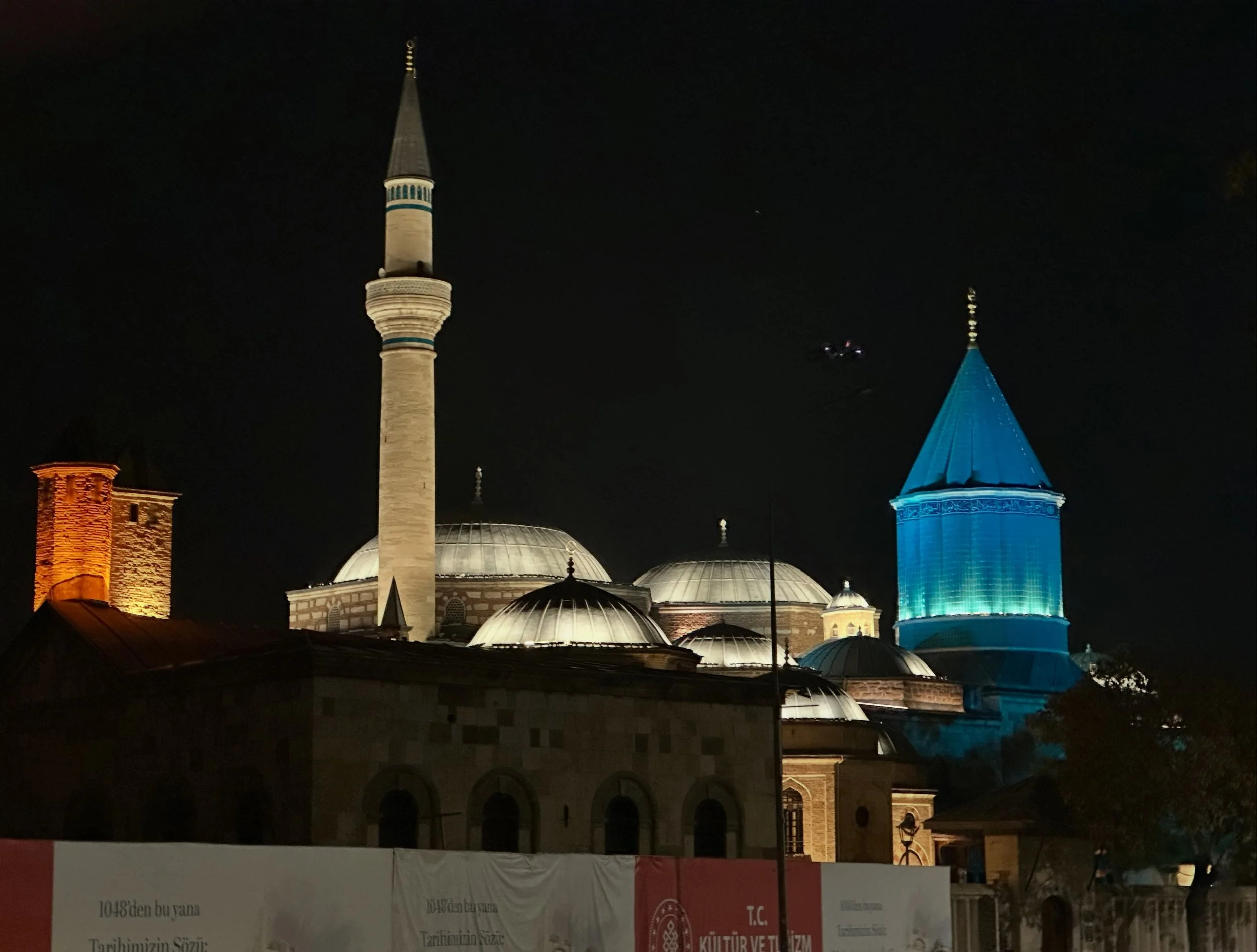
For me, an interesting side topic was the veneration of the poet Rumi as a prophet and the dervish sect that honors him through their whirling meditative dances. The dervish we met were quite solemn about the actual whirling dance they do but afterwards proved very open and friendly.
They are not professional insofar as they are not licensed by the government and support themselves with day jobs. Officially they’re not religious organizations but “foundations” dedicated to preserving Turkish culture.
Since their sect embraces peaceful devotion and non-violence, the Turkiye government pretends not to see the religious aspects and considers them merely honoring Rumi in their dances.
© Buzz Dixon
Where To Find Me Online
Blog - Substack – Threads - Tumblr – Instagram – Bluesky
https://substack.com/@buzzdixonwriter
https://www.threads.com/@buzz_dixon_writer
https://buzzdixonwriter.tumblr.com
https://www.instagram.com/buzz_dixon_writer/
@buzzdixon.bsky.social