
If You Can’t Grow, You’ll Never Know (Part 4 of 5)
I was a post newspaper editor / information specialist (journalist) when I was in the Army, and not a particularly good one.
Much of my time I spent banging out short stories I couldn’t sell, spec screenplays I could never submit.
I’ve told the story many times of how after I was discharged in 1978, I went looking for work in Hollywood in any capacity: Driver / mailroom / gopher / you name it.
As in the cases of The Beatles and Dean R. Koontz, one day luck broke in my favor. If any one of a dozen different factors hadn’t been available, I wouldn’t have gotten a chance to meet Arthur Nadel at Filmation Studios.
But I did meet him and we struck it off well and one thing led to another and before I knew it, I had a career writing TV animation.
Let’s chart my subsequent growth, shall we?
A few years ago I found the first script I ever sold to Filmation. Based on that script, I wouldn’t hire that writer.
Despite its fatal flaws, the script at least shows a willingness to try for the best, even if the final result falls far short.
Through the encouragement and mentorship of Arthur and Filmation story editors Chuck Menville and Len Janson, I acquired the basic skill set to write for television (Len did try to crush my head against a wall with a coat rack once for something I said in a story conference, but that’s another tale for another time).
From Filmation I went to Ruby-Spears where I met and became friends with Steve Gerber.
Joe Ruby’s goofy show ideas offered plenty of opportunity to stretch my imagination and broaden my skill set (you try writing a cartoon about a fat skeleton and see how challenging it can be).
Eventually it also gave me a chance to write for Thundarr The Barbarian where I worked and became friends with a host of creative artists including Jack Kirby and Jim Woodring.
Insights from on how best to tell a story visually (not to mention make the animators’ jobs easier) proved invaluable once I left Ruby-Spears.
Thundarr was a fun show, something right in my wheelhouse with my background as a sci-fi fan, but while it was the best kid adventure show we could do, it suffered from network imposed constraints.
I freelanced for a bit, writing “Quest Of The Skeleton Warrior” for the Dungeons And Dragons animated show. “Quest Of The Skeleton Warrior” marked an important milestone for me as a writer, my first chance to not only write a sympathetic antagonist but to explore things that we fear -- I mean really fear, not the superficial fear of spiders and snakes and such.
Fear of ridicule, fear of abandonment, fear of being viewed as a baby or conversely, of growing up too fast.
Things our audience really did experience on occasion, not make-believe monsters.
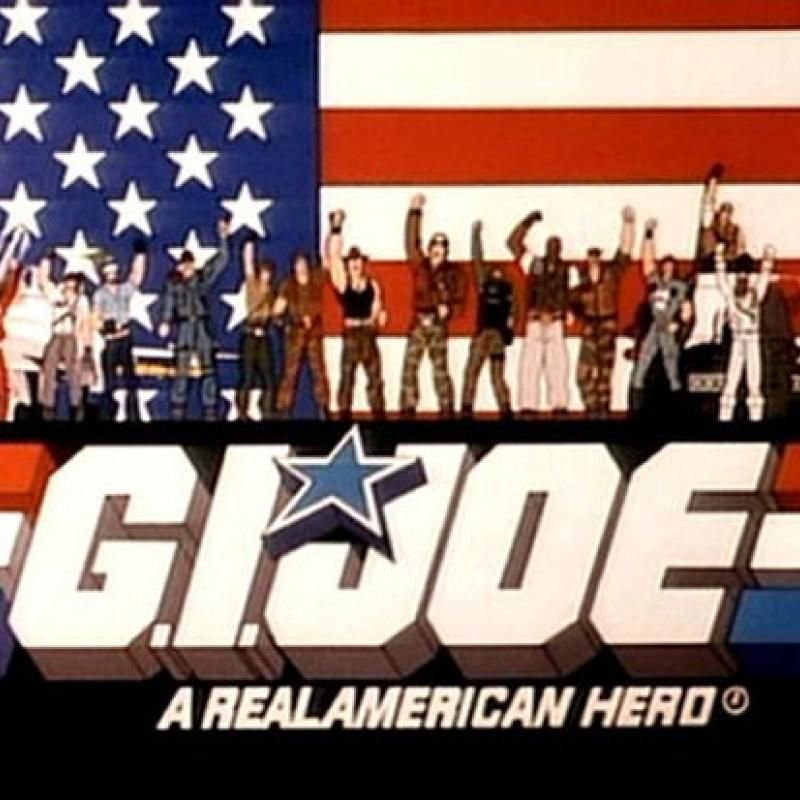
After that I landed a staff writer job at Sunbow that quickly evolved into a story editor position.
“Haul Down The Heavens” was my tryout script, your standard bad guys have a bad machine that will make a bad thing happen unless the heroes stop them. Nothing special, but it proved I could write for the show. Hasbro handed me a list of six characters, three vehicles, and a couple of play sets -- none of which shared any commonality other than being in the toy line -- and told me to write a story based on them.
It could have been hack work if I just opted to slap everything together, but instead I tried to figure out a story where all the disjointed elements worked in harmony.
It got me hired.
Next I wrote “Twenty Questions” and for once I could do a story my way without network fiat telling me what could not be done. “Twenty Questions” is a light story both in content and tone, but it gave me a chance to roast Geraldo Rivera in the form of bombastic broadcaster Hector Ramirez (who ended up becoming the lynchpin that ties the G.I Joe / Transformers / Inhumanoids / Jem universes together…but again, another tale for another time). This would never be allowed on regular Saturday morning shows, but I was pissed at Rivera’s crass faux-journalism exploitation and wanted to say something about it.
This led to a two-parter, “The Traitor” which played as an obverse of Dungeons And Dragons’ “Quest Of The Skeleton Warrior.” In that episode, viewers came away realizing that while that episode’s villain did evil things, he did them for a motive one couldn’t find fault with, a motive they might be inclined to use to justify their own bad behavior. “The Traitor” flipped that, showing how a good person faced with a terrible burden might be tempted to take ethical and moral shortcuts (the eponymous traitor ultimately proved not to be a traitor at all but a double agent fooling the bad guys, but until that reveal I kept my audience guessing).
And while officially assigned to G.I. Joe, I wrote scripts for every other show coming out of the Sunbow West office, including “The God Gambit” for Transformers, another episode where I vented my spleen, this time indirectly at televangelist grifters by having the Decepticons set themselves up as gods on an alien world.
© Buzz Dixon
![The Root Of The Problem [FICTOID]](https://images.squarespace-cdn.com/content/v1/590697e7d1758ec4d7669624/1758349071579-XZ5CO5EXFRFB4L0OJ77D/FT+329+The+Root+Of+The+Problem+-+Worby+Tree+Services+SQR.jpg)
![Never On A Sunday In An Ikea [FICTOID]](https://images.squarespace-cdn.com/content/v1/590697e7d1758ec4d7669624/1758348402681-XEDETTBFUVQ57NPTG3R5/FT+328+Never+On+A+Sunday+In+An+Ikea+SQR.jpg)