What I Saw On My Way Home
Flying back from our trip to Turkiye via Amsterdam, I took the opportunity to check out a few movies and TV shows on the plane’s entertainment system.
Most of the stuff being offered I either didn’t care for or else were films I hadn’t seen yet but with solid enough recommendations that I didn’t want to watch them in less than optimum conditions.
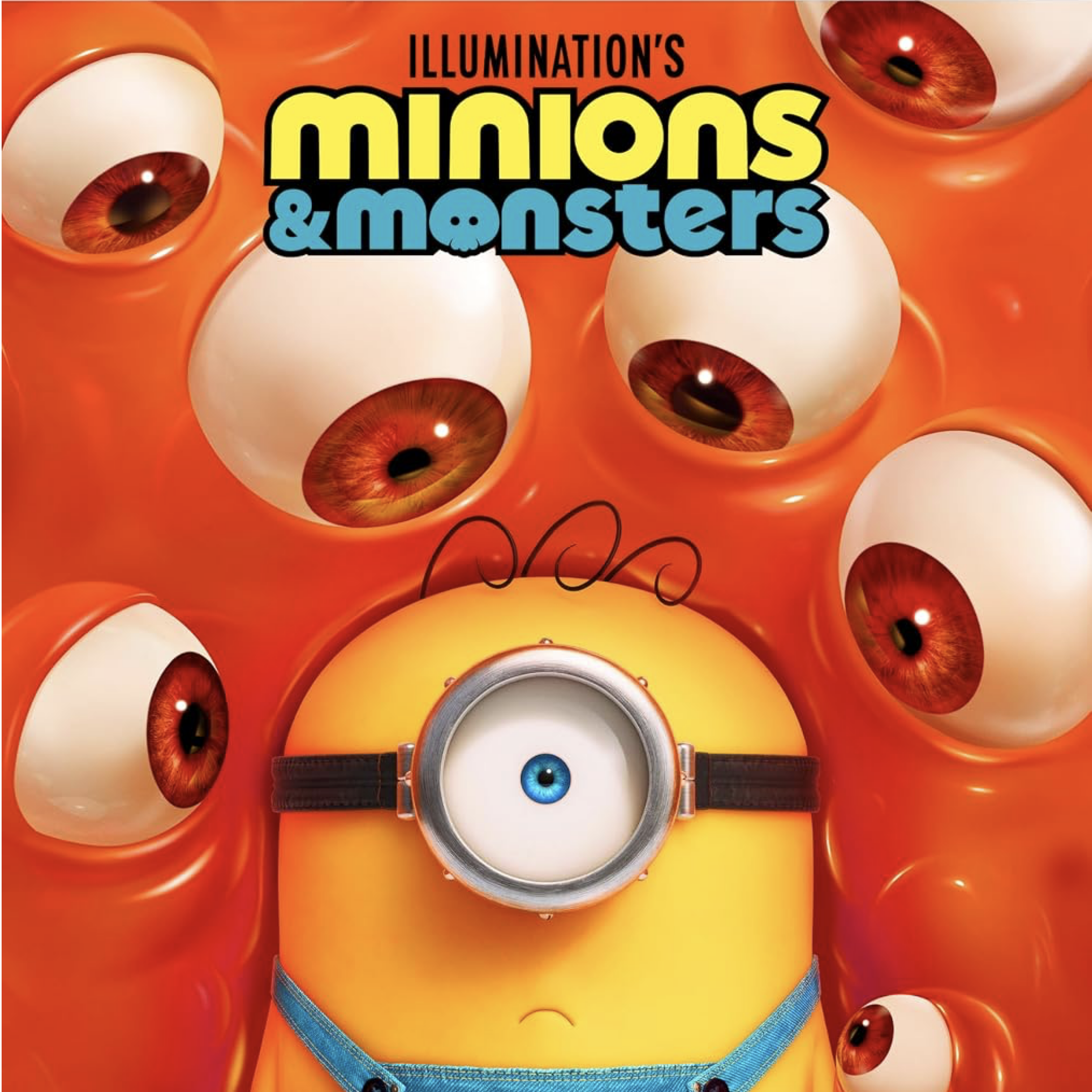
The exception was Minions & Monsters. I’d seen the trailer and based on the previous Despicable Me / Minions movies decided to give it a whirl. I expected nothing but Minion gags and while not exceptional, neither did it disappoint. Although I fell asleep about one-third of the way into it and woke up for the last ten minutes, I could figure out what happened easily enough.
It covers much of the same territory as 2022’s Babylon only a lot more accurately, which should tell you plenty about Babylon.
Past that I went mostly with old favorites though in one case the old favorite was the character in his original comic book, not the previous movie.
I really like Doctor Strange, especially in the earliest Steve Ditko drawn stories where his art created bizarre otherworldly dimensions. I even enjoyed the 1978 TV movie despite its low budget and felt bummed out that it didn’t get a TV series.
So when Benedict Cumberbatch was cast as Stephen Strange, I was primed and ready. Alas, I wasn’t able to connect fully with the 2016 movie. There were parts I liked (especially the brief foray into the 1970s blacklight poster universe; nice touch, Marvel Cinematic Universe) and individual scenes and bits that brought a fond smile to my lips, but ultimately it just didn’t jell for me.
I can probably best explain this by likening my reaction to the John Wayne’s three versions of the same story: Rio Bravo (1959) / El Dorado (1966) / Rio Lobo (1970). Rio Bravo runs smoothly like a Swiss watch, not a wasted line or scene, everything fitting together perfectly. El Dorado offers many individual scenes that are better than their counterparts in Rio Bravo but ultimately is more of a Rube Goldberg device than a precision timepiece.
Rio Lobo is just a junk drawer.
The problem with the MCU version of Doctor Strange is that there’s only the El Dorado and Rio Lobo versions; the pitch perfect Rio Bravo of Doctor Strange movies does not exist (at least not in this universe).
All of which is a really long and cumbersome way of saying I got about 10-15 minutes into Doctor Strange And The Multiverse Of Madness then started skipping ahead 5 minutes, then 10, then 20, and finally abandoning it unfinished.
Every movie is somebody’s favorite movie, but Doctor Strange And The Multiverse Of Madness is not mine. It just seemed tiresome and trite, one cliché slathered atop another.
I also sampled a few anime, including episode 1 of season 14 of One Piece. I got about 5 minutes into this one, realized the series moved far, far afield from what I’d seen decades earlier in season 1, and gave up trying to figure out how everything fit together.
I did watch Singin’ In The Rain all the way through. I’ve seen this movie at least a half dozen times on TV and have the Blue-Ray so I can watch it whenever I wish, but after failing to connect with either Doctor Strange or Luffy I felt like wallowing in something I felt very familiar with.
As always, I enjoyed it, but this time I turned the subtitles on and followed the actual storytelling more closely that before.
Like Rio Bravo, this is a fine-tuned instrument. It works perfectly, with little bits of business circling back to subtlety advance the story without drawing undo attention to themselves (case in point, Rita Moreno as Zelda Zanders displaying growing animosity to Debbie Reynolds’ Kathy Selden each time they encounter one another with Kathy never realizing it until Zelda betrays her to Jean Hagen’s Lina Lamount near the climax of the film).
It’s a good, solid story, well sung / danced / acted, and arguably the finest movie musical ever made.
My next choice -- albeit of an entirely different genre -- was another example of good writing in a story I’d seen and enjoyed many times before.
“The Cage” was the unlucky first pilot for the original Star Trek. Like most fans my age, I first saw the re-cut two-part series version “The Menagerie” retooled to wedge it into the much more familiar original series.
But the original pilot is a stronger story on its own, and while I’m disappointed that version of Star Trek did not go to series, the revamped version stands on its own.
It’s a well-done story. Though Soon-ok commented it looked a bit silly for today, remember it was shot in 1965 on a TV budget. The only shows even remotely similar to it on American TV were old 1950s kid-vid sci-fi such as Tom Corbett, Space Cadet and Space Patrol.
And ya know what? That’s part of the charm. What made shows like Star Trek and Doctor Who and even the early Lost In Space fun was the unspoken agreement between creators and audience: If you agree to pretend this papier-mache boulder is an alien planet, we promise to tell you an entertaining story. The paucity of the budgets and the heavy reliance on allusion instead of illusion to sell the story is what got us involved with them in the first place.
“The Cage” and with the second Star Trek pilot “Where No Man Has Gone Before” and the classic Forbidden Planet comprise my favorite sub-sub-genre: Space operas that focus on vast alien intellects that affect the humans encountering, forever changing and altering them psychically in unexpected ways.*
These kinds of stories were a staple in John W. Campbell’s Astounding Stories (now Analog) in the 1940s through early 1960s, and “The Cage” in particular could have easily appeared in the pages of his magazine.
To follow this up, I watched the first episode of Star Trek: Strange New Worlds, which logically picks up sometime after the first pilot to show Captain Pike’s career after “The Cage”.
And…it disappointed.
First off, the script neve really seemed to jell. I’ll grant you “The Cage” was written with 1965 TV standards and practices looming large over it, but again it was so stylized a show one could overlook those shortcomings.
Everything in Star Trek: Strange New Worlds looks too good, too realistic. As mentioned, the charm of early 1960s / 70s TV sci-fi was that it invited us to play along with the production, helping us become emotionally invested in the show.
Modern sci-fi series no longer invite us to play along and pretend, they clobber us over the head with overly slick special effects and elaborate set / costume / make-up designs.
As a result, one feels even more detached, not immersed in the world being shown.
And the script? Compared to Singin’ In The Rain and “The Cage” the script for Strange New Worlds felt clunky, not amateurish but virtually the opposite. Akiva Goldsman, writer / producer / director of the series is an Oscar-winning screenwriter who clearly possesses the chops to do quality work, but so much of this script felt like a first draft with scenes and dialog blocked out, earmarked to be revised and rewritten later…only later never arrives.
As I said, it’s not that there are no good things in Strange New Worlds. There are several interesting bits such as a flashforward to show Pike fricasseed and in his wheelchair, indicating the eventual end of the series when he’s returned to Talos to be with Vina.
But on the whole it’s the same situation re this and “The Cage” as with Rio Bravo and El Dorado: The first version hangs together as a whole, the revamp doesn’t despite many positive things to recommend it.
© Buzz Dixon
* I’ll even throw in the 3 different versions of Solaris, the 3 different versions of Dune, and 1962’s Journey To The Seventh Planet which can most charitably be described as an interesting misfire.